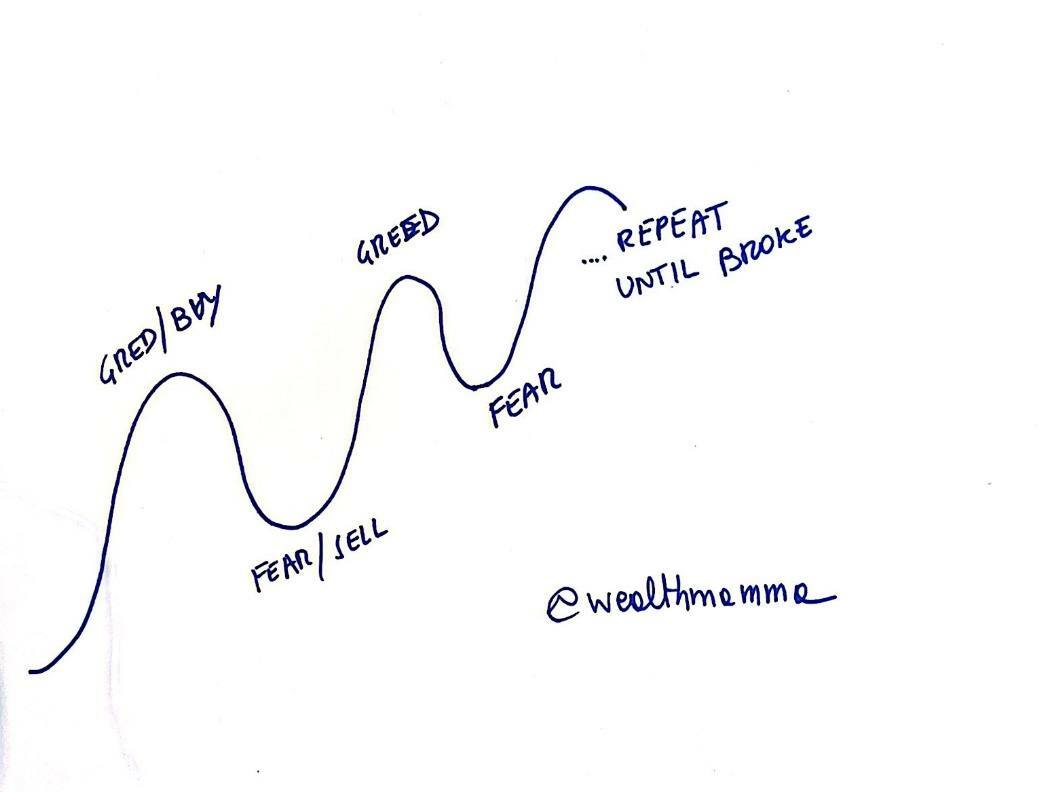
Let’s talk about one of the biggest traps we tend to fall into with our money: buying high when excitement is high and selling low when fear takes over. This is especially true when it comes to single stocks. When the market’s hot, we’re eager to buy in, convinced we can’t lose. But when it’s down, we’re just as quick to pull out, cutting our losses. And we end up repeating this cycle over and over—often to our detriment. With single stocks, where volatility can be even higher, this behavior can hurt us even more. Now, imagine doing this in any other situation. Picture walking into an Audi dealership and saying, “I need a new A6.” The salesperson responds, “Great timing! We just marked them up 30%.” And you say, “Perfect! I’ll take three!” It sounds absurd, but that’s exactly what we do with our investments. Here’s why: We’re naturally inclined to move towards what feels safe and enjoyable and steer clear of things that might cause us pain. This instinct has served us well for survival, but in investing, it leads us to chase trends and follow the crowd—often in the wrong direction. When everyone’s buying, it’s tough to stay on the sidelines; it feels like we’re missing out or even putting ourselves in financial danger if we don’t join in. But here’s the truth: You don’t need to be a genius or Warren Buffett to recognize that this kind of emotional investing hurts us in the long run. By staying steady, practicing dollar-cost averaging, and putting in a set amount regularly regardless of the market's highs and lows, you’ll be in a much better position to ride out the swings. With this approach, you’ll find that avoiding the hype and staying consistent can actually pay off in the long term. |