interest rates and mortgages + best and worst days in the market

Newsletter Archive

THE WEALTH PLAN

LETTER TEN

Hello friend,
Here we are with the tenth letter of the Wealth Plan, which is designed to empower your financial journey!
This week I am writing from Ortisei, a small alpine village in Val Garden, Dolomites (Italy) where they speak German despite the fact that we are in fact in Italy. This summer, thanks to my online business which is 80% automated I have been able to travel a lot with my son first  ( as a solo and present parent) and with both my son and husband here in the mountains.
Let's Dive in....

FINANCIAL LITERACY

Here we are covering the last pillar to be considered financially literate! If you read all of the five newsletter covering the five pillars, BIG CONGRATULATIONS!!! 
Onto today's topic: relation between the duration of a mortgage and the amount of interest you pay
What is a mortgage?

A mortgage allows you, for example, to buy a house today and pay it back to the bank a little sum every month. A home mortgage is a type of loan specifically designed to finance home purchases.  Mortgages have the following characteristics:

  • The house purchased acts as collateral.
  • The interest rate is expressed as an APR, and payments are monthly.
  • Fixed-rate mortgages have a fixed rate over the term of the mortgage, while adjustable-rate mortgages (ARMs) have interest rates that change with the rate in the economy.
  • Lenders often require a down payment to help protect themselves against depreciation in the house’s value in the event of foreclosure.
  • Mortgage interest payments are typically tax deductible (may vary based on country of residency)

Mortgage lenght and the interest you pay

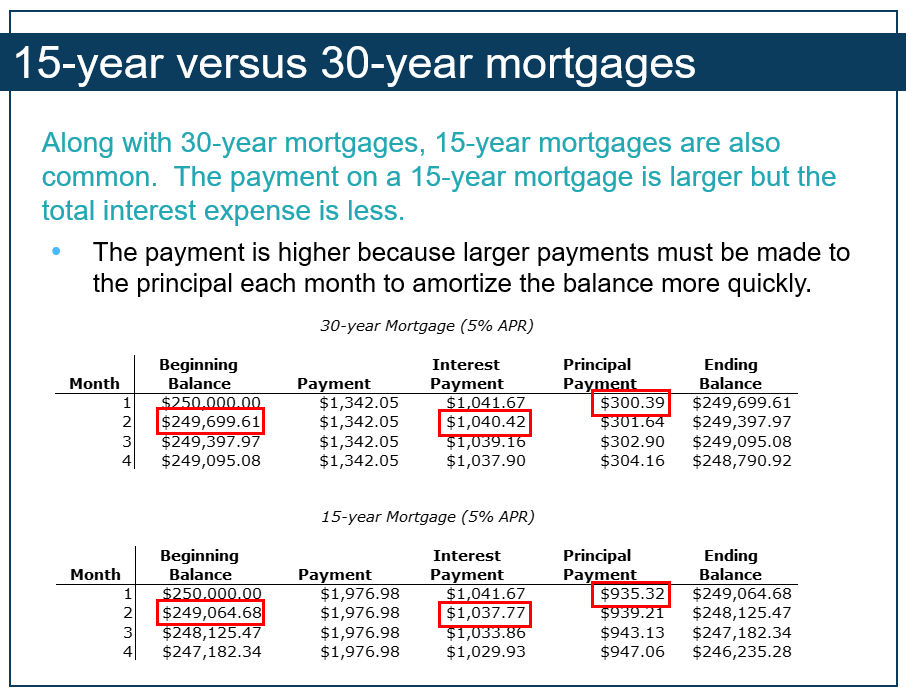
The longer the duration of the mortgage (i.e 30 years) the lower the monthly payments ...BUT... the higher the interest (cost of the mortgage)  you will end up paying to the bank. Viceversa, the lower the duration of the mortgage (i.e. 15 years), the higher the monthly payments but the lower the interest (cost of the mortgage) you will pay to the bank.

Again...TIME IS MONEY.

2024-08-10_08_51_26-Lecture_7_Sola_lettura_-_PowerPoint_Attivazione_del_prodotto_non_riuscita

ADVANCED FINANCIAL PLANNING 

In the past two weeks, the markets have experienced significant volatility, leading many of you to ask what action should be taken in such situations.

The answer might surprise you, but it’s either "do nothing" or "invest more."

Here’s why:

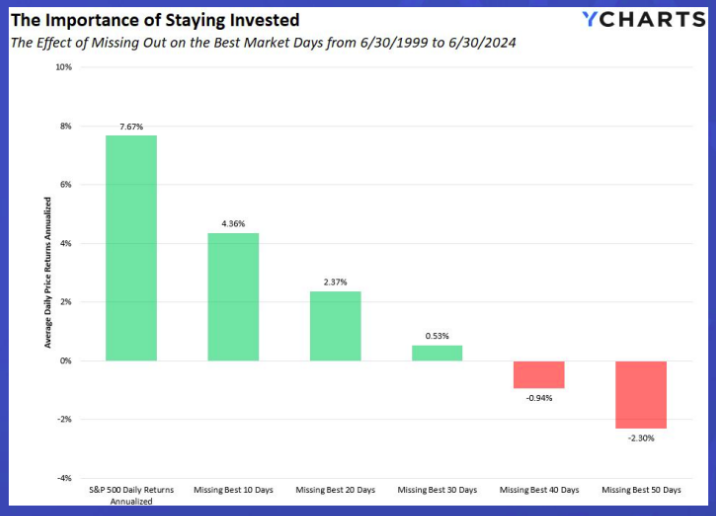
Over the last twenty years, if you had stayed invested in the S&P 500, your average annual return would have been 7.7%. However, if you missed just the ten best days in the market, your return would have dropped to 4.36%. Missing the twenty best days would have reduced your return to just 2.4%.

Why is this important? Because those "best days" often occur during periods of market correction.

In fact, just last week, following some of the worst days of the recent sell-off, we saw some of the best returns in the past couple of years—exactly as historical data suggests.

2024-08-11_21_45_02-Inbox_26953_-_elisabettaaqallc
Book a 1:1 FREE consultation with me
2024-07-08_12_46_14-White_Elegant_Minimalistic_Background_Twitter_Profile_Picture_-_Immagine_di_prof

BEYOND FINANCE

Today, we’ll explore the concept of "goals with emergency reserves," a tactic rooted in research by Wharton Professor Marissa Sharif.

What exactly does this mean?

A goal with an emergency reserve is essentially a challenging objective that includes built-in flexibility. For example, consider a goal of going to the gym seven days a week with an allowance for two skip days, or a budget that allocates $100 for emergencies each week or month.

Why do emergency reserves help people achieve more?

There are two main reasons:

1. Resistance to Using Emergency Reserves:
When you set a goal, such as walking 10,000 steps daily for seven days with two skip days, people tend to push themselves to meet the seven-day target. They strive to reach their goal every day, holding onto those emergency reserves for truly unavoidable situations. This approach keeps them focused on the difficult goal while reserving flexibility for genuine emergencies.

2. Persistence After a Setback:
Hard goals can be a double-edged sword—they motivate people to put in maximum effort, but their difficulty also means setbacks are likely. Emergency reserves come into play when those inevitable missteps occur. They provide a buffer, allowing people to recover and persist in their efforts, rather than giving up entirely after a failure.


Quote of the Week

In investing, what is comfortable is rarely profitable

cit. Robert Arnott


Like what you read? Share this email with a friend and help me reach my mission to share financial education around the globe. Your friends can sign up at the link below. THANKS!!!


JOIN THIS NEWSLETTER
photo_2024-08-12_16-57-39_feb4eafc
2024-08-12_16_42_07-White_Modern_Minimalist_Signature_Brand_Logo_-_Logo_192973ff

Past Newsletters

Letter One

Letter Two

Letter Three

Letter Four

Letter Five

Letter Six

Letter Seven

Letter Eight

Letter Nine

© Copyright, 2024,Elisabetta Basilico,@thewealthmamma

You received this email as a customer or subscriber of @thewealthmamma Click here to leave mailing list

New Text Section

Click in the section and start typing to add content.

Sent via

SendPulse