The Wealth Plan-Letter Four: Financial Literacy Around the World+ Answers to the Quiz+ The Clean Fifteen

Newsletter Archive

THE WEALTH PLAN

LETTER FOUR

Hello friend,
Here we are with the fourt letter of the Wealth Plan, which is designed to empower your financial journey!
Let's Dive in....

FINANCIAL LITERACY

Financially literate people can make informed financial choices regarding saving, investing, borrowing, and more. 
Differently,  financial illiteracy carries significant costs, such as consumers who fail to understand the concept of interest compounding, spend more on transaction fees, run up bigger debts, and incur higher interest rates on loans. They also end up borrowing more and saving less money. 
Let's start with the correct answers from last week quiz:
1)A; 2)C; 3)B
And now, to give you a little bit of context, let's see how financially literate is the world!
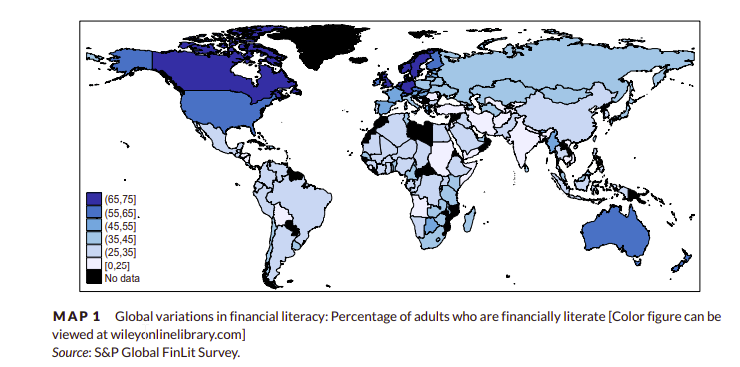
Based on the report "Financial Literacy Around the World" (Klapper et al., 2020), only 33% of adults around the world responded correctly to all of three questions and are considered financially literate. The US comes in above the average at 57%. Below some other country's statistics
Canada 68% 💥
Italy 37%
France 52%
Germany 66% 💥
Spain 49%
UK 67% 💥
South Africa 42%
Mexico 32%
India 24%
Japan 43%
Australia 64% 💥
The least literate countries are Yemen, Albania, and Afghanistan, with literacy rates below 15%. In contrast, Denmark, Sweden, and Norway are the most literate, boasting a literacy rate of 71% (🎉). Unfortunately, women, on average, have lower literacy rates than men. Additionally, both the youngest and oldest adults tend to display lower financial literacy skills.
Given that women, on average, have lower literacy rates than men, and that the youngest and oldest adults often struggle with financial literacy, my Instagram page is dedicated to addressing these critical issues. With my extensive background, education, and skills, I aim to empower as many women as possible by raising their financial literacy and, in turn, enhancing the financial knowledge of their children. By sharing everything I know, I hope to create a ripple effect of informed, financially savvy individuals who can confidently navigate their financial futures.
Follow me on my Instgram Page
2024-06-28_10_47_10-Financial_literacy_and_financial_resilience__Evidence_from_around_the_world

ADVANCED FINANCIAL PLANNING 

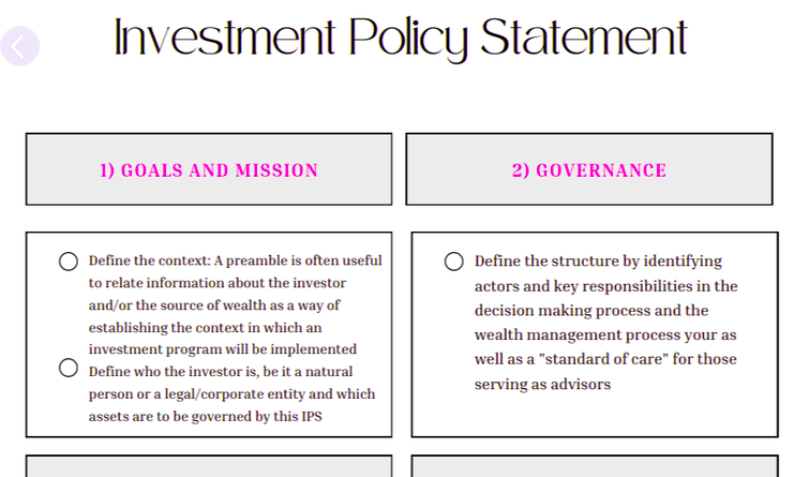
In this section, today I will share a little bit of information on the first section of the Investment Policy Statement (IPS), that is the "Scope and Mission."

This section serves the purpose to contextualize how the wealth has been created (with a little bit of historical background so that future generations understand the legacy you have created) as well as to manifest the goals you want to achieve with this wealth.

In fact, you can start by relating information about the investor and/or the source of wealth as a way of establishing the context in which an investment program will be implemented.

This way the users of your IPS, be your advisors or other family members ( like your future generations) will alway know the context, your values, your goals, your mission and the legacy that you envisioned!

2024-06-11_19_00_46-thewealthmamma
Get my Investment Policy Statement Checklist and Framework here

BEYOND FINANCE

Last week we talked about the twelve fruit and veggies with the most amount of pesticides and erbicides.

The good news is that there is also an officila list of the FIFTEEN CLEAN PRODUCE 😊

Here they are:

1.Avocados

2. Sweetcorn

3. Pineapple

4.Onions

5.Papaya

6. Frozen Sweet Peas

7. Asparagus

8. Honeydew Melon

9. Kiwi

10. Cabbage

11. Mushrooms

12. Mangoes

13.Sweet Potatoes

14.Watermelon

15.Carrots


With_anticipation

Past Newsletters

Letter One

Letter Two

Letter Three

© Copyright, 2024,Elisabetta Basilico,@thewealthmamma

You received this email as a customer or subscriber of @thewealthmamma Click here to leave mailing list

Sent via

SendPulse