THE WEALTH PLAN-LETTER THREE: Measure your financial literacy + the "Dirty Dozen"

Newsletter Archive

THE WEALTH PLAN

LETTER THREE

Hello friend,
As we embark on this journey with 'The Wealth Plan,' let’s pause for a moment into what each newsletter will unveil.
Designed to empower your financial journey, our letters are tailored with a threefold purpose:

Section One:  To Enhance your Basic Financial Literacy,

Section Two: To Expand your Horizons with Advanced Financial Planning,

Section Three: To Ignite your Curiosity with Insights beyond Finance

Let's Dive in....

FINANCIAL LITERACY

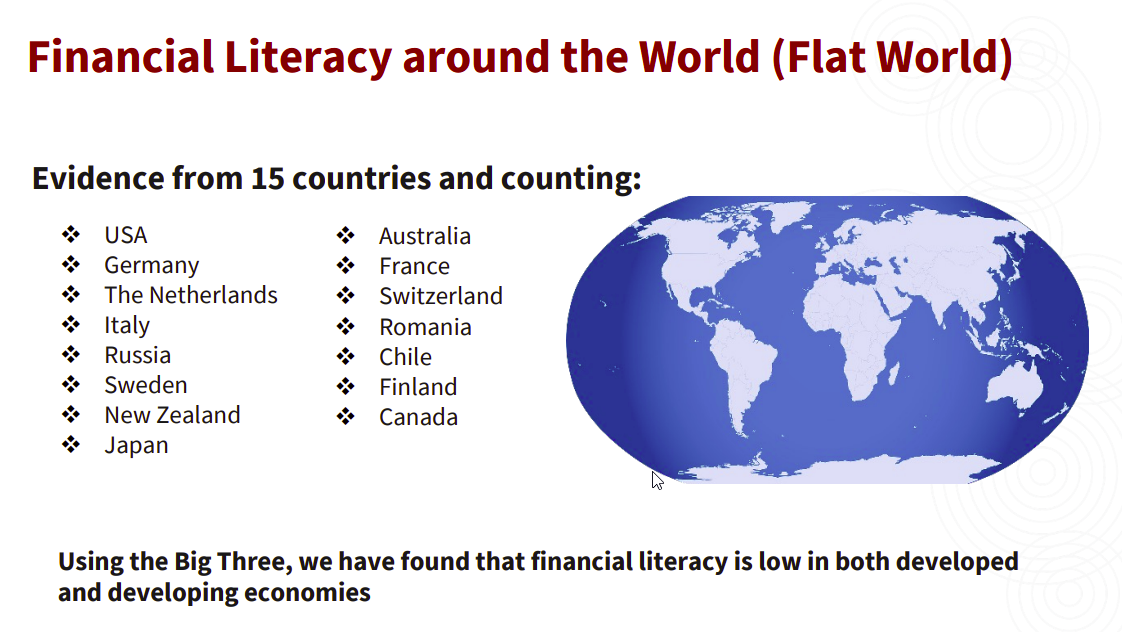
Today we are going to measure your financial literacy level. As usual, I am going to refer back to research and use the Big Three Questions developed by Lusardi and Mitchell (2013)*, which have been used since 2004 to test one's financial literacy around the globe.
Note down your answer as I will be sharing the correct answers next time with some contextualization of how financial litarate is the world :)
1) Suppose you had $100 in a savings account and the interest rate was 2% per year. After 5 years, how much do you think you would have in the account if you left the money to grow?
A) More than $102
B) Exactly $102
C) Less than $102
D) Do not know
E) Refuse to answer

2) Imagine that the interest rate on your savings account was 1% per year and inflation was 2% per year. After 1 year, how much would you be able to buy with the money in this account?
A) More than today
B) Exactly the same
C) Less than today
D) Do not know
E) Refuse to answer

3) Please tell me whether this statement is true or false. “Buying a single company’s stock usually provides a safer return than a stock mutual fund.”
A) True
B) False
C) Do not know
D) Refuse to answer
*Lusardi,A. and O. Mitchell, Financial Literacy Around the World: an Overview, Journal of Pension Economics and
Finance
2024-06-16_17_11_02-Presentation-Lusardi-Lucia-Lecture_v3

ADVANCED FINANCIAL PLANNING 

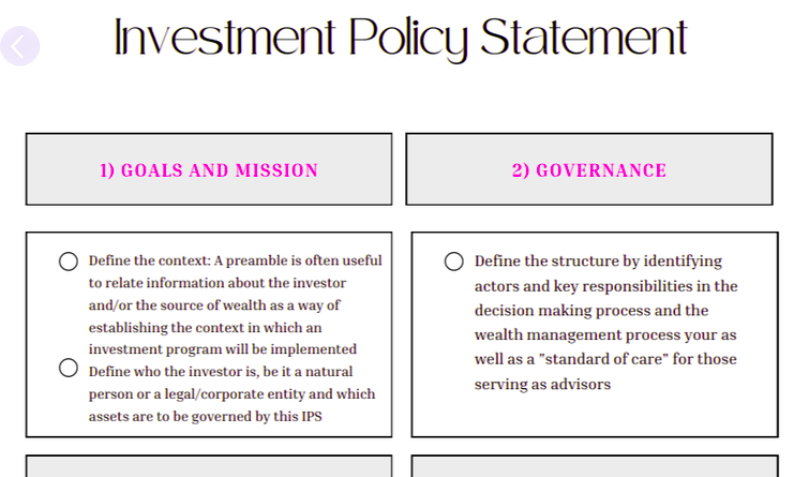
In this section, today I will share the sections of a comprehensive Investment Policy Statement (IPS), your manual to successful financial planning.

SECTION 1: SCOPE AND MISSION

SECTION 2: GOVERNANCE

SECTION 3: INVESTMENT AND RISK OBJECTIVES + ASSET
ALLOCATION

SECTION 4: PORTFOLIO IMPLEMENTATION

SECTION 5:  PERFORMANCE AND RISK MANAGEMENT

2024-06-11_19_00_46-thewealthmamma
Get my Investment Policy Statement Checklist and Framework here

BEYOND FINANCE


Ever heard of the Dirty Dozen?

Since 2004, the Environmental Working Group (EWG) publishes the Shopper’s Guide to Pesticides in Produce™—a crucial tool for choosing healthier, less contaminated produce. Established in 1993, EWG has been championing consumer health and a cleaner environment following a pivotal 1993 report by the National Academy of Sciences on the impact of pesticides in children's diets, highlighting the significant differences in exposure levels between children and adults, and the risk of exceeding safe levels in kids.

Just because it's legal, doesn't mean it's safe. EWG highlights the risks of pesticides on produce—not just designed to eliminate pests but also posing significant health risks to humans, including cancer, hormone disruption, and brain toxicity. Despite most residues on fresh produce being within legal limits according to the Department of Agriculture and FDA, these limits don't necessarily indicate safety. EWG's annual Shopper’s Guide helps navigate these concerns by identifying produce with the least pesticide residues.

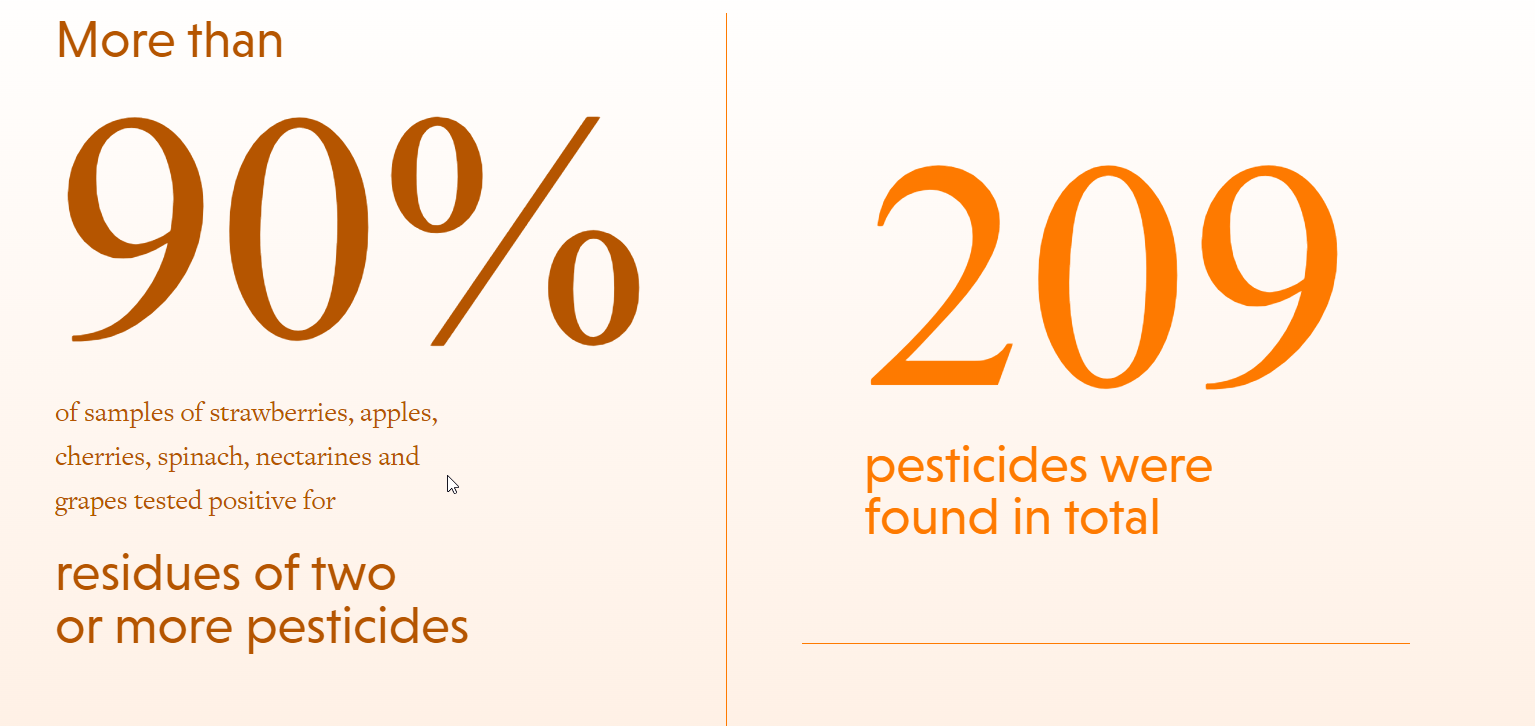
  • EWG’s 2024 Dirty Dozen™ is loaded with fungicides that can disrupt human hormone systems.
  • This year, 75 percent of non-organic produce – and 95 percent of items on the Dirty Dozen – is coated with pesticides

But let's cut to the chase and here is the list of 2024 Dirty Dozen:

1.Strawberries

(The average American eats about eight pounds of fresh strawberries a year – and with them, dozens of pesticides, including chemicals that have been linked to cancer and reproductive damage, or that are banned in Europe) 

2.Spinach

3. Kale, collard & mustard greens

4.Grapes

5.Peaches

6.Pears

7.Nectarines

8.Apples

9.Bell and hot peppers

10.Cherries

11. Blueberries

12.Green Beans

Is there a solution? I found it in 11.5 ph Molecular Hydrogen Water which has the power to remove oily pesticides and herbicides. watch this reel where I show you my fruits and veggies cleaning routine!

2024-06-17_14_04_27-EWGs_2024_Shoppers_Guide_to_Pesticides_in_Produce___Dirty_Dozen
Watch my fruits and veggies cleaning routine
Learn more about the Dirty Dozens

With_anticipation

Past Newsletters

Letter One

Letter Two

© Copyright, 2024,Elisabetta Basilico,@thewealthmamma

You received this email as a customer or subscriber of @thewealthmamma Click here to leave mailing list

Sent via

SendPulse