THE WEALTH PLAN LETTER TWENTY-ONE |
|
|
|---|
|
Hello Friend, Welcome to the 21st edition of the Wealth Plan—a newsletter designed to empower and elevate your financial journey! Tomorrow, November 5, the U.S. Will Have a New President—But I’m Not Panicking Am I worried? Nope. Why? Because my finances are in order, and I’ve built a rock-solid, long-term investing plan that won’t be shaken by election outcomes. That’s exactly what this newsletter is here to help you with: creating financial stability that lasts, no matter who’s in office. Ready to build financial confidence that can weather any change? Let’s dive in! Let's now dive in, |
|
|
|---|
|
Investing for Our Kids: Four Key Options Custodial Roth IRA 529 Plan Custodial Account (UTMA/UGMA) Individual Brokerage Account
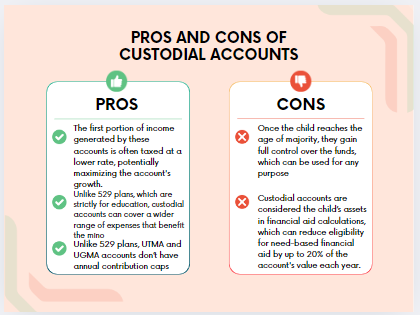
As promised, I’m diving into the pros and cons of various investment accounts for your kids. Today, we’re highlighting the Custodial Accounts. Check out the graphic below for a quick breakdown of its benefits and drawbacks. Stay tuned for more insights on other account options in future updates! UTMA stands for Uniform Transfers to Minors Act UGMA stands for Uniform Gifts to Minors Act When planning to set aside assets for children, custodial account offer a straightforward way to save and invest for a child's future. Unlike a trust, these custodial accounts don’t require extensive legal work to set up. However, before opening an account, it's essential to understand the benefits and limitations. Benefits of Custodial Accounts (UTMA & UGMA)Simple Setup, No Trust Required
Setting up a custodial account is straightforward and typically doesn't require legal assistance, making it accessible to most families. Tax Advantages for Growing Assets
The first portion of income generated by these accounts is often taxed at a lower rate, potentially maximizing the account's growth. After a threshold, income may be taxed at the parent’s rate (the "kiddie tax"). Flexible Asset Types (Especially UTMA)
UTMAs can hold a broad range of assets, from cash and stocks to real estate and intellectual property. UGMAs are generally limited to financial assets like stocks, bonds, and cash. Encourages Financial Responsibility
Once they reach the age of majority (18–21, depending on the state), children gain control of these funds, which can help them learn financial responsibility. No Contribution Limits
Unlike 529 plans, UTMA and UGMA accounts don’t have annual contribution caps. Contributions above the annual gift tax limit may require reporting, though. Funds Can Be Used Broadly
Unlike 529 plans, which are strictly for education, custodial accounts can cover a wider range of expenses that benefit the minor, giving the child greater financial flexibility when they reach adulthood.
Drawbacks to Keep in Mind Lack of Control Over Funds After Majority Age
Once the child reaches the age of majority, they gain full control over the funds, which can be used for any purpose. This may be a concern if the account has grown significantly, as there’s no way to restrict how the funds are spent. Financial Aid Impact
Custodial accounts are considered the child’s assets in financial aid calculations, which can reduce eligibility for need-based financial aid by up to 20% of the account's value each year. Potential for Higher Taxes (Kiddie Tax)
If investment income in the account surpasses certain limits, it may be taxed at the parent’s higher tax rate, limiting the tax benefits. Irrevocable Contribution
Once assets are transferred into a UTMA or UGMA, they belong to the child and cannot be withdrawn by the donor. This can be a drawback if family financial situations change and funds are needed elsewhere. Limited to Financial Assets in UGMA Accounts
While UTMA accounts can hold a wider range of assets, UGMA accounts are
If you live outside the U.S. and would like insights on investment options specific to your country, feel free to email me, and I’ll be happy to cover it in a future newsletter! |
|
|
|---|
|
ADVANCED FINANCIAL PLANNING |
|
|
|---|
|
Is This Election Your Worst Investment Nightmare? Think Again For many investors, this election season feels like a terrifying gamble. It’s like choosing between a shark in the ocean or a lion in the bush—either way, someone’s getting hurt. And with half the country likely to feel disappointed no matter the outcome, it’s understandable to worry about how election results might impact your portfolio. But here’s the irony: sharks and lions account for only a handful of human deaths each year—sharks kill around ten, and lions about a hundred. The real killer? It’s a tiny pest that’s often ignored but claims nearly a million lives annually. Likewise, while many investors are bracing for dramatic losses from the election, there’s a more subtle, steady threat to your wealth, and it’s probably not even on your radar. The pest we’re talking about is the mosquito. And in the investing world, its deadly equivalent? Fees. Surprisingly, many investors don’t realize how much they’re actually paying in fees. In a survey by U.S. News and World Report, nearly half of employed baby boomers believed they paid nothing in investment fees, and 19% thought their fees were under 0.5%. Yet, the average retirement account incurs around 1.5% annually. While we worry about big, dramatic risks, like a lion or a shark, we overlook the quiet, constant nibble of fees—costing us far more than we realize. So, this election, don’t let fear cloud your view. Focus on understanding and managing fees to protect your long-term wealth. |
|
|
|---|
|
Unplugged and Present: The Rise of Digital Minimalism and Phone-Free Reading Clubs In an era dominated by constant notifications, endless scrolling, and multiple screens, digital minimalism is emerging as a movement to help people reclaim focus and intentionality in their lives. The concept is simple: reduce digital clutter, streamline your tech use, and be mindful about the time you spend online. By cutting back on digital distractions, many people find they’re able to enjoy a deeper sense of presence and satisfaction in their daily lives. Studies have shown that frequent phone use can increase stress and anxiety, while digital minimalism helps break the cycle, allowing people to focus on what truly matters. This practice encourages setting boundaries—like designating phone-free spaces and scheduling intentional "offline" time—to foster balance and clarity. One new trend bringing digital minimalism to life is the rise of reading clubs in coffee shops where phones are left at the door. These clubs offer a space for individuals to read, converse, and reflect without digital interruptions. Instead of tapping on screens, members are encouraged to dive into books, share thoughts with others, or simply enjoy a moment of quiet over a cup of coffee. The experience is both nostalgic and refreshing, a reminder of the rich connections and insights that come from unplugging. These clubs are creating a sanctuary for those seeking mindful, tech-free interactions—a perfect example of how digital minimalism can enrich our lives, one screen-free moment at a time. Here is a list of coffee shops that are promoting the no phones reading clubs: 1. New York City, USA - Rizzoli Bookstore Café: This charming café inside the iconic bookstore encourages reading and often hosts book events. It’s a great spot to enjoy a coffee while diving into a good book, sans distractions.
2. Paris, France - Shakespeare and Company: This legendary bookstore has a small café where you can sit and read. It promotes a literary atmosphere that encourages patrons to leave their devices behind and immerse themselves in literature.
3. Tokyo, Japan - Book and Beer: Located in the Takadanobaba area, this unique shop combines a love of reading with craft beer. They have a cozy atmosphere that encourages reading without the interference of mobile devices.
4. Melbourne, Australia - The Readings Bookshop: This popular bookstore includes a café where reading is encouraged. Events often take place in a relaxed setting, fostering a community of book lovers who appreciate unplugged conversations.
5. London, UK - The Coffee House: This café near the British Library promotes a no-phones policy during their book clubs and readings, allowing attendees to engage fully with the text and each other.
6. Seattle, USA - Third Place Books: With multiple locations, this community-oriented bookstore has cafés that host reading events and book clubs, encouraging patrons to focus on books rather than their screens.
7. Amsterdam, Netherlands - The Bookstore Café: This café combines a bookstore with a comfortable reading space where patrons are encouraged to leave their phones behind while they read or attend literary events.
8. Toronto, Canada - Type Books: This independent bookstore has a cozy café area that promotes reading and often hosts book club events, creating an atmosphere conducive to unplugging.
9. Copenhagen, Denmark - Paludan Book & Café: This unique café located in a former bookstore offers a comfortable space for reading. It encourages patrons to enjoy their books in a tech-free environment.
10. Rome, Italy - Caffè Letterario : This literary café in Rome combines a coffee shop with a cultural space that hosts book presentations, poetry readings, and other literary events. The ambiance encourages patrons to relax and read without distractions.
|
|
Quotes of the Week "In investing, what you don’t pay is as important as what you earn."— Unknown "Fees are the silent killers of wealth."— Unknown |
|
|
|---|
|
DISCLAIMER: The information provided in this newsletter is for educational and informational purposes only and does not constitute financial advice. It is important to consult with a licensed financial professional or advisor before making any investment or financial decisions. Every individual’s financial situation is unique, and any strategies or tips shared here may not be suitable for your specific circumstances. Always conduct your own research and consider seeking professional guidance. |
|
|
|---|
|
|
Sent via  |
|