The Power of Habits + Why I aìinvest in Index Funds+ The Top Five Best Pizza

Newsletter Archive

THE WEALTH PLAN

LETTER FOURTHEEN

Hello friend,

Here we are with the 14th edition of the Wealth Plan—a newsletter crafted to empower your financial journey!

This week, I’m writing to you from home where all of sudden summer ended and autumn came. I love autumn and all the colors and smells it brings like apple cider, cinnamon and pumpkin spices.

Let's now dive in,

FINANCIAL LITERACY

This week focus on my FREE "The Wealth Plan" coaching container is about the importance of buiilding habits around savings.

The key to everything is HABITS. If you haven't read it yet, I strongly encourage you to read the book "The Power of Habit by Pulitzer prize winner Charles Duhigg.

This book helps you understand why habits are at the core of everything you do, how you can change them, and what impact that will have on your life, your business and society.

Here are your 3 must-takeaways:

  1. Habits work in 3-step loops: cue, routine, reward.

    Duhigg discovered that at the core of every habit, including something as simple as your morning coffee, is a three-part loop.First, there's the cue—the trigger that prompts the habit. For example, sitting down at your kitchen table for breakfast every morning at 7 AM might signal it's time for coffee.Next comes the routine—the automatic behavior that follows the cue. In this case, it could be walking over to the coffeemaker, turning it on, and pressing the “large cup” button. Finally, you receive a reward for completing the routine. This might be the rich aroma of freshly brewed coffee, its bold flavor, or the soothing sight of steam rising from the cup in the morning sunlight (I really love coffee, can you tell?).

  2. You can change your habits by substituting just one part of the loop, the routine.

    Naturally, the more frequently you reinforce a habit, the more deeply it becomes ingrained in your brain.Take your coffee habit, for example. You might start craving it the moment you sit down at the kitchen table. And if your coffee machine breaks one morning, you’ll likely feel irritable and find yourself buying a cup later at work. The key to changing a habit, however, is not to break it entirely, but to modify the routine while keeping the rest of the habit loop intact.Duhigg refers to this as the golden rule of habit change.If you're trying to cut back on caffeine, the adjustment is surprisingly easy: simply switch to decaf. (Just ask my "friend" Replacing Rick!) You’ll still enjoy the familiar experience—waking up, brewing coffee, and savoring your morning ritual. The only difference is you’re pouring hot water over decaf grounds instead. And just like that, you won’t even miss the caffeine.

  3. Willpower is the most important habit, and you can strengthen it over time with 3 things.
    1. Take on a challenging task: Doing something that requires discipline—like sticking to a strict wake-up routine or diet—helps you practice delaying gratification, which strengthens your willpower for the rest of the day.

    2. Prepare for tough situations: Simply imagining worst-case scenarios, like your boss yelling at you, can help you stay calm and composed when they actually happen.

    3. Maintain your autonomy: Autonomy is key to a passionate life—and to willpower. When you have control over your tasks, your willpower stays stronger. On the other hand, being assigned tasks with no choice can quickly drain it.

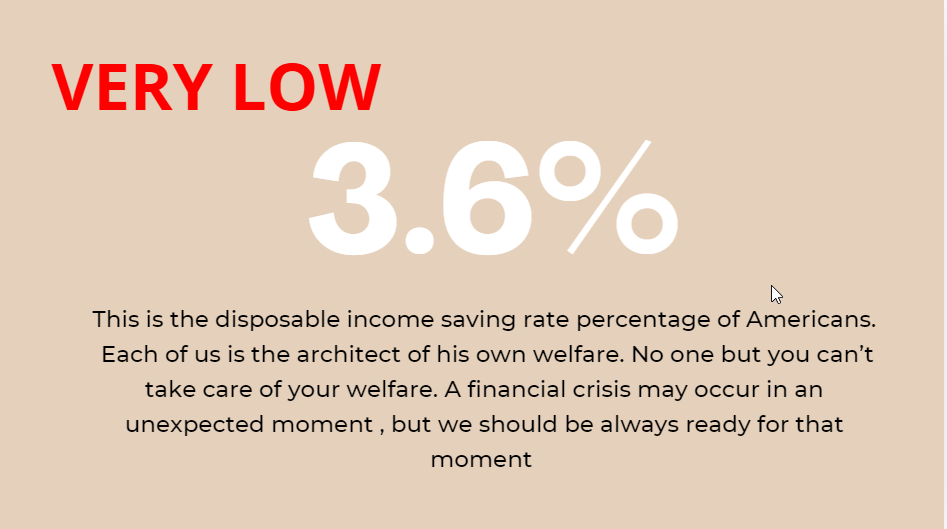
Back to "Savings", let me ask you a quick question: Do you save AT LEAST 20% of your total net income?

If not, you should sign up and attend my FREE "The Wealth Plan" coaching container because I will provide you with tools to start saving (& ultimetely investing) more! Sign up here. The  next container starts at the beginning of October!

2024-09-15_11_02_19-Financial_Education_with_Elisabetta_-Part_2_v2_-_Presentazione_-_Canva

ADVANCED FINANCIAL PLANNING 

Last week, I invited you to reflect on a key question in building your Investment Policy Statement (IPS) and, ultimately, growing your wealth:

What is your investment philosophy when it comes to the nature of financial markets?

Did you have a chance to think it over? I’d love to hear your thoughts! And if you have any questions, don’t hesitate to reach out.

As for me, I consider myself a "passive investor." In practice, this means I focus on low-cost index funds and Exchange-Traded Funds (ETFs) as the cornerstone of my portfolio.

It wasn’t always this way. Early in my career, I was a firm believer in "active management."

So, what changed my mind? My decision-making process is grounded in research and a careful analysis of empirical evidence.

One of the most compelling pieces of evidence I rely on is the SPIVA Scorecard, published annually for the past 20 years. Compiled by S&P Dow Jones Indices, the SPIVA Scorecard compares the performance of actively managed funds to their benchmarks.

When a fund outperforms its benchmark (after fees), it’s considered to have "outperformed," meaning it’s adding value. If a fund underperforms its benchmark (after fees), it’s "underperforming," and investors are potentially leaving money on the table.

Let’s dive into the latest available SPIVA statistics:


UNITED STATES

In the last fifteen years 88% of equity actively  managed mutual funds UNDERPERFORMED their benchmark (hint: they did not obtain their goal, hence you would have left money on the table if invested in them!)

EUROPE

In the last ten years 92% of equity actively  managed mutual funds UNDERPERFORMED their benchmark (hint: they did not obtain their goal, hence you would have left money on the table if invested in them!)

CANADA

In the last ten years 96.6% of equity actively  managed mutual funds UNDERPERFORMED their benchmark (hint: they did not obtain their goal, hence you would have left money on the table if invested in them!)

SOUTH AFRICA

In the last ten years 71% of equity actively  managed mutual funds UNDERPERFORMED their benchmark (hint: they did not obtain their goal, hence you would have left money on the table if invested in them!)

AUSTRALIA

In the last fifteen years 85% of equity actively  managed mutual funds UNDERPERFORMED their benchmark (hint: they did not obtain their goal, hence you would have left money on the table if invested in them!)

Are you curious about other countries? Shoot me a reply with your question!

Did I convince one way or another? Would love to know :)

BEYOND FINANCE

This week we are going to talk about pizza! Who does not like it? 

Do you you that there are more than 245,000 pizza restaurants  in the world, with around 77,000 in the U.S. alone? Norway consumes the most pizza in the world on a per capita basis, with each resident eating about 11 pounds annually and more than 5 billion pizzas are sold worldwide each year (*)!

But which are places where to eat the best pizza?

According to TOP 50 PIZZA, they are:

GLOBALLY

Una Pizza Napoletana- New York

Diego Vitagliano- Napoli

I Masanielli- Caserta

The Pizza Bar on 38th- Tokyo

Confine- Milano

ITALY

Diego Vitagliano- Napoli

I Masanielli- Caserta

Confine- Milano

I Tigli- San Bonifacio (Verona)

50 Kalò- Napoli

UNITED STATES

Una Pizza Napoletana- New York

Tony's Pizza Napoletana- San Francisco

Pizzeria Beddia- Philadelphia

Ribalta- New York

Ken's Artisan Pizza- Portland

* AAaronAllen & Associates


Quote of the Week


"Don’t look for the needle in the haystack. Just buy the haystack!"
John C. Bogle (Founder of Vanguard and pioneer of index investing)

"The difference between who you are and who you want to be is what you do"

Charles Duhigg (Author, The Power of Habit)


2024-09-15_10_33_26-Logo_Social_Media_Manager_Iniziali_Rosa_-_Logo_-_Canva

Past Newsletters

Letter One; Letter Two; Letter Three; Letter Four; Letter Five; Letter Six

Letter Seven; Letter Eight; Letter Nine; Letter Ten, Letter Eleven, Letter Twelve, Letter Thirteen

© Copyright, 2024,Elisabetta Basilico,@thewealthmamma

You received this email as a customer or subscriber of @thewealthmamma Click here to leave mailing list

Sent via

SendPulse