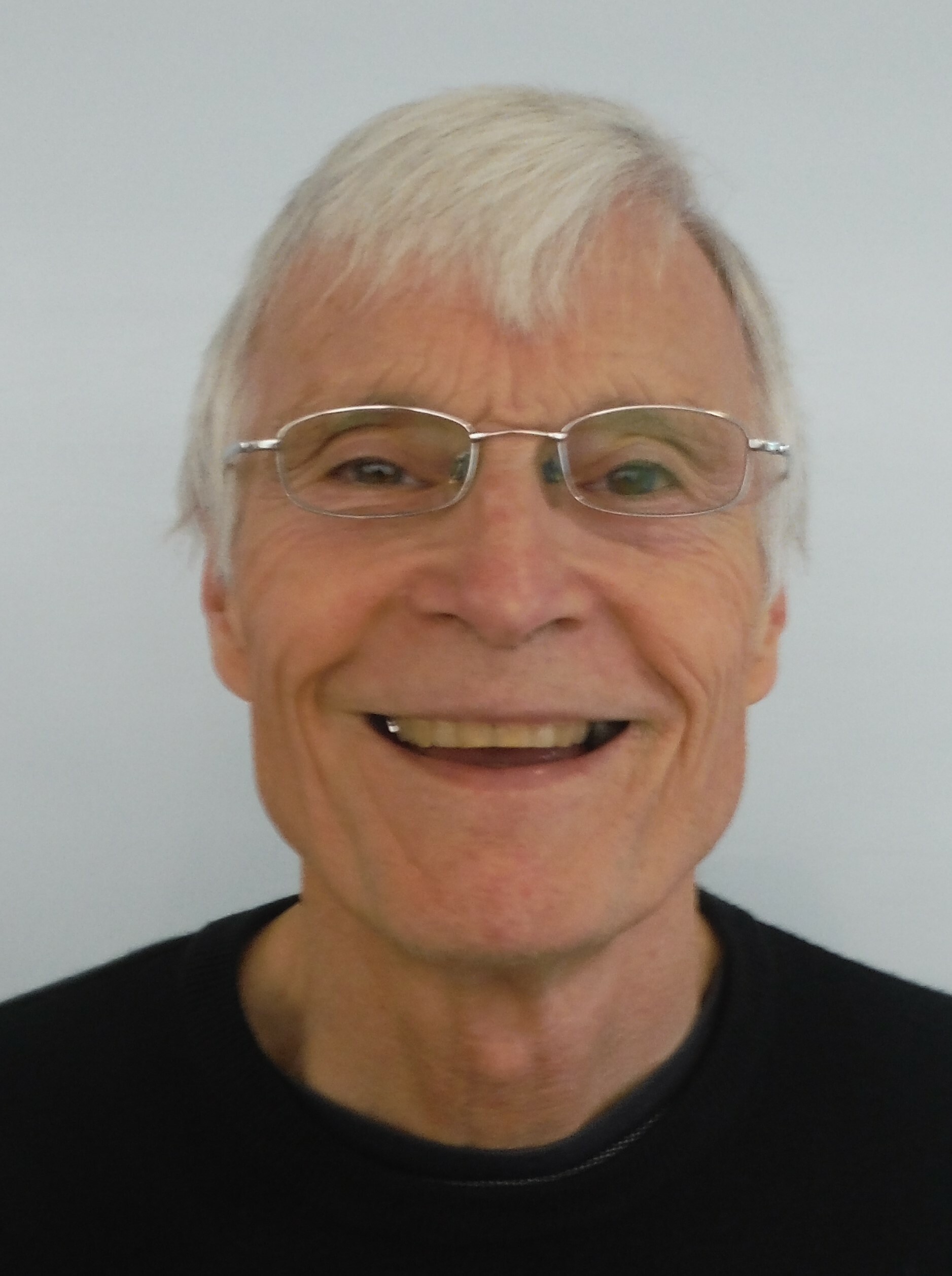
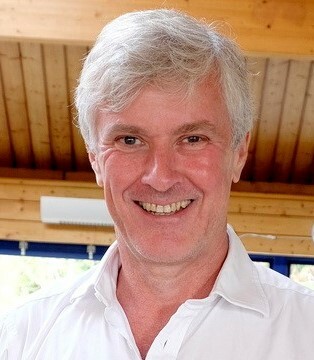
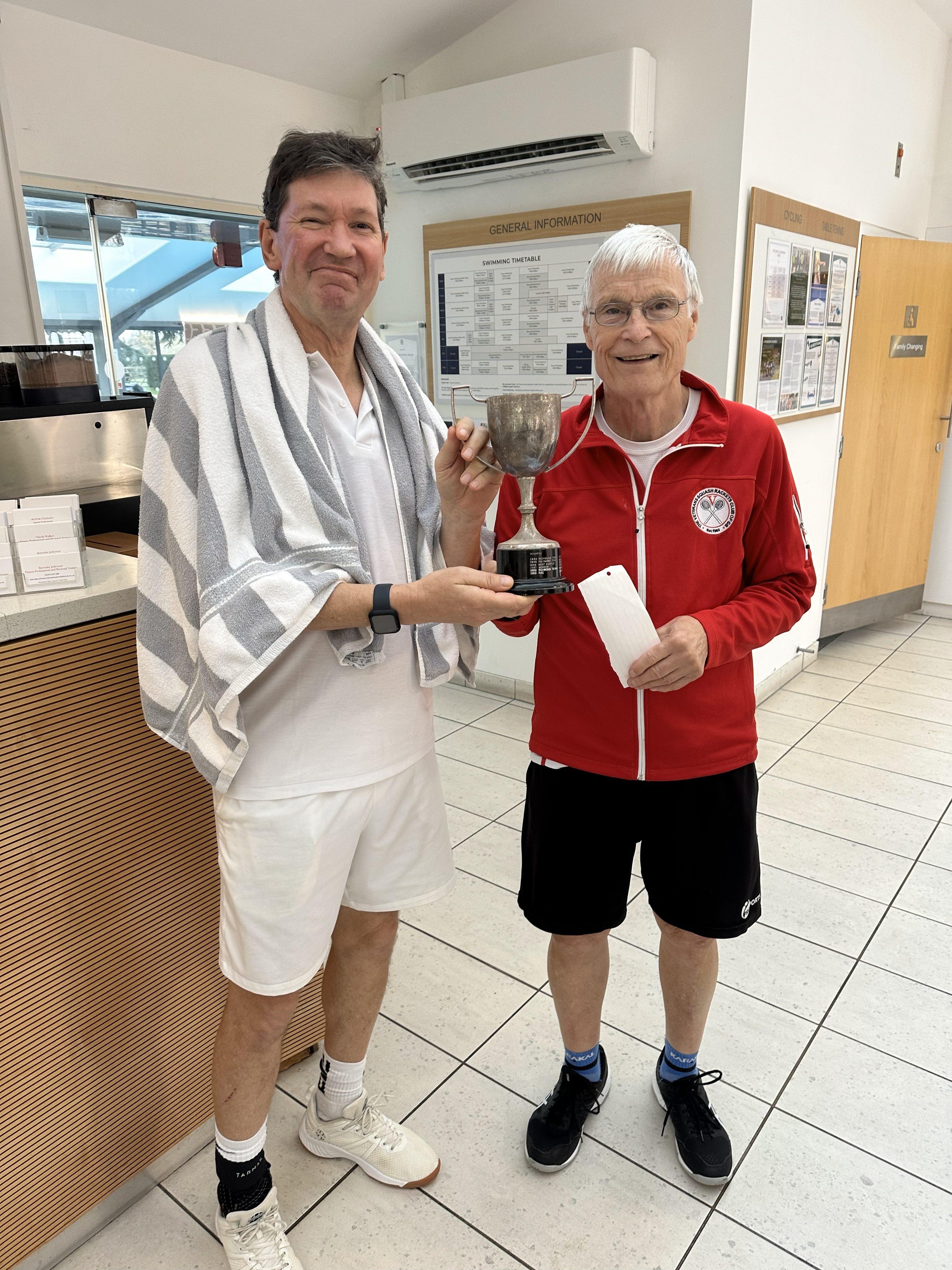
The Nick Sheppard we encounter at GB Vets and Masters tournaments: he's a squash player of course, unfailingly friendly, clearly familiar with - and known to - most of the players. But Nick has the hint of a sharp eye that suggests he's capable of much more than simply turning up on time at tournaments for his game. He's clearly accustomed to getting stuff done, and it's no surprise to discover that he was able to retire from his day job all the way back in 2017, at the early age of 53. A lot of stuff clearly well done through his business career. Talking to Nick, you quickly find that he thinks a lot about whatever he's involved in, whether it's helping to provide a non-cliquey atmosphere for newcomers to GB Vets and England Squash Masters, or, as a player, that he's dealing with the bad habits creeping into his leftie forehand. When Nick was growing up his main game was golf. Like many left handed sports people, he played the two-handed games as a right hander. This has been a boon for his squash backhand, not so far removed from a well-hit iron shot, but correspondingly, it has not helped his forehand. So, thorough as he is, Nick continued to spend time working on improving those bad habits, particularly for his forehand, mainly with Paul Selby. Golf, right handed, was Nick's passion through his teens. If you had to guess where he continued his education when he left school, you'd be right: the University of St Andrews! He is the youngest of five in his family, and it would have been typical of his parents to encourage him in his sport as well as his studies. But after a year or so of intense university golf Nick felt that his putting would never quite match the quality of his game from tee to green so he started, with great relish, to indulge in other sports, cricket - first eleven as a fast bowler, squash - second team, badminton - first team and... captain of croquet. The latter meant that he was included in the annual St Andrews University photo of sports captains, a source of great pride! In the middle of all his sport at St Andrews, Nick found time for mathematics, which led to his career in banking. His first role was in the City, on the floor of the Stock Exchange as one of the last of the stock jobbers, who disappeared with the big bang. A three month posting to Tokyo in the early nineteen nineties extended eventually to eleven years, two children and three jobs, the final one being with Morgan Stanley. After his eventual return to England in 2003 he stayed with Morgan Stanley until 2012 before leaving to set up a team for Investec. That achieved, he took retirement in 2017. Life at St Andrews provided Nick with a template: sport was woven inextricably through the serious stuff. In Tokyo there was a highly competitive cricket league, with nationally based teams from Pakistan, Sri Lanka and India, the UK obviously, and an Anzac group full of first and second grade players. Nick remarks on a real contrast between Tokyo and his time on the Fife coast, where midweek games of cricket could comfortably be completed after a five pm start, late into the unending Scottish twilight. In contrast, Tokyo is on the same latitude as Tunis (I've verified this on my globe), so the dusks are non-existent; play had to start early in the day. Tokyo also had a thriving squash scene, with squash included in big cricket tours to other Asian destinations, notably Bangkok. Given this overseas background, it's not a surprise that Nick was relatively late to his present involvement in squash in the UK. When he returned, he resumed cricket at his old club in Bishops Stortford, near his parents' home. But it was a long drive for all day games of cricket, plus seeing his parents. Added to this, the squash at Bishops Stortford was exciting, with the club prominent in European competition, and Nick was made very welcome by the manager, Jason Foster. So, given the distance from his home near Chelmsford, it made more sense for Nick to focus on the much briefer game of squash. As soon as he started to play in Masters events, Nigel Belle of GB Vets and Martin Pearse of England Squash Masters both latched on to him, which is how he came to be on the committees of both clubs. GB Vets benefits greatly from the energy Nick, as Fixtures Secretary, brings. You only have to look at the hugely expanded list of active, as opposed to paper, fixtures, many now geographically distant from the traditional club stronghold in the South East. Nick has a full life outside squash. He and his wife Sue have two adult children, with their son Cameron continuing the sporting mantle, passed down apparently from Nick's - highly competitive - mother. Nick and Sue enjoy walking and cycling including an expedition down a large proportion of the West coast of Norway. A return is planned with the intention to cycle to the northermost point in Europe in the near future. An overall impression is that, like lots of modest people, Nick has a great deal to be modest about. I'm looking forward to his answers to the five questions below! Here are Nick’s five questions. - Who was the best player you ever played?
Ah, there’s no sport mentioned! At golf, there’s such a gulf between top amateurs and professionals that I’d have to say the best players I have played competitively were in Hawaii. Through a friend I managed to get an invitation to play in a scratch skins game run by the professionals at the main resort courses and ended the day significantly in profit. At cricket I’ve played against Derek Kallicharran in Scotland as well as against an MCC team captained by Roger Knight in Japan but I would say the best player was a post-graduate student at St Andrews named Shiraz Dharsi. Shiraz captained Sunil Gavaskar when they played together at Bombay University and after a stint as a professional in England he was back at university doing a research project on sports psychology. His average for my first season in Scottish universities cricket was over 300 and not surprisingly we won the tournament easily. Shiraz also coached squash and I remember two of his sayings – “squash is such a friendly game, we always want to come to tea” and “if you don’t know what to do toss the ball up to Jesus and let him sort it out”. Which brings me neatly to squash. Although I’ve been lucky enough to be on court with Peter Nicol, Amr Shabana and Daryl Selby in my time that doesn’t really count so I’d say I’m looking at the top players in my cohort in masters squash but I’m too discreet to pick one in particular from that group. - What would you choose: winning the Open at St Andrews, the World Squash Championship at Giza in front of the pyramids, or taking a five for, including the last Aussie wicket, at the SCG to win the Ashes?
Without doubt, winning the Ashes at the SCG. I’ve been fortunate to play golf and cricket in front of crowds and there is no feeling quite like it so to be able to win on a stage like the SCG would be incredible. As an aside, in 1984 when Seve Ballesteros won the Open at St Andrews, I was in charge of the scoreboard at the first green for the whole tournament so I could argue I’ve come as close as I can to that experience although not as close as a friend - my colleagues from the university golf club who were running the big board behind the 18th green did swap out Seves’ name for that of Brian Viner while the presentation was going on so you could argue that Brian Viner won the Open at St Andrews before going on to his career in journalism! - What motivates you to contribute to GB Vets and England Squash Masters?
Why, why, why? It’s a question Sue constantly asks me, especially when it's the height of the season and I’m disappearing most weekends for ESM or Vets events. There is a great camaraderis in masters squash and I would in some way feel guilty if I was able to take so much pleasure from it without offering to give something back and hopefully leave things in a better place for the next person to step up. - What are you most proud of in your sports career?
While I don’t have as extensive an injury record as Jonny Willkinson, it is fair to say I have built up a quite lengthy inventory of damage over the years so I’m partly proud that not only am I still physically able to take part but I also have the desire to. Mostly though, I’m proud of the opportunities sport has given me to meet people and the stories that resulted – quite a few at my own expense. I learned quite early that once the original trophy goes back, the miniature replicas get lost in cupboards – unless of course your name is Stuart Hardy! – so its important to cherish the memories and emotions of those moments and that includes the days when the performance was awful. Fifth question, chosen by Nick: - Is it more rewarding to play one sport to your best possible standard or to play several complementary sports but at a lower standard?
One to start a few bar arguments and I'm sure everyone will have different answers based on their own experience. As a teenager I spent a lot of time playing and practicing golf and I got to a standard where I could appreciate how much work I would need to do to continue improving. That was a commitment I wasn't willing to make and I also felt I was missing opportunities to try other sports so my choice was to maintain a decent standard at golf, learn new sports along the way and hopefully play them well enough to make it enjoyable. Implicit in that is also a view about the importance of winning. I play sport because I enjoy it and the ones I enjoy most are the ones where I find it most challenging to raise my standard. If I was primarily motivated by winning I would have maintained my younger commitment to golf but I would have missed the great experiences and friendships I gained from all the other sports I've tried, in particular cricket and squash. I'd be interested to know how other vets view this - especially as age is inexorably moving our benchmarks against us. |